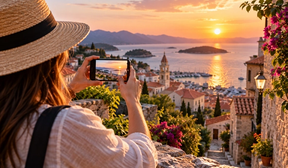
The Islands Worth the Long Flight
There is a particular moment during a long-haul journey when every island starts to seem like a terrible idea. You’ve been on a plane for ten hours. Your body has stopped understanding what time it is. The airport coffee costs too much. There may still be another flight, ferry, or boat between you and your hotel.
By Alex Slavistki on October 9, 2026
There is a particular moment during a long-haul journey when every island starts to seem like a terrible idea.
You’ve been on a plane for ten hours. Your body has stopped understanding what time it is. The airport coffee costs too much. There may still be another flight, ferry, or boat between you and your hotel.
Then you arrive.
Some islands justify the effort precisely because they’re difficult to reach. Distance has helped create landscapes, cultures, wildlife, and ways of life that feel genuinely different from what you left behind.
If you’re going to spend half a day crossing the world, these are the kinds of places worth doing it for.
Bora Bora, French Polynesia
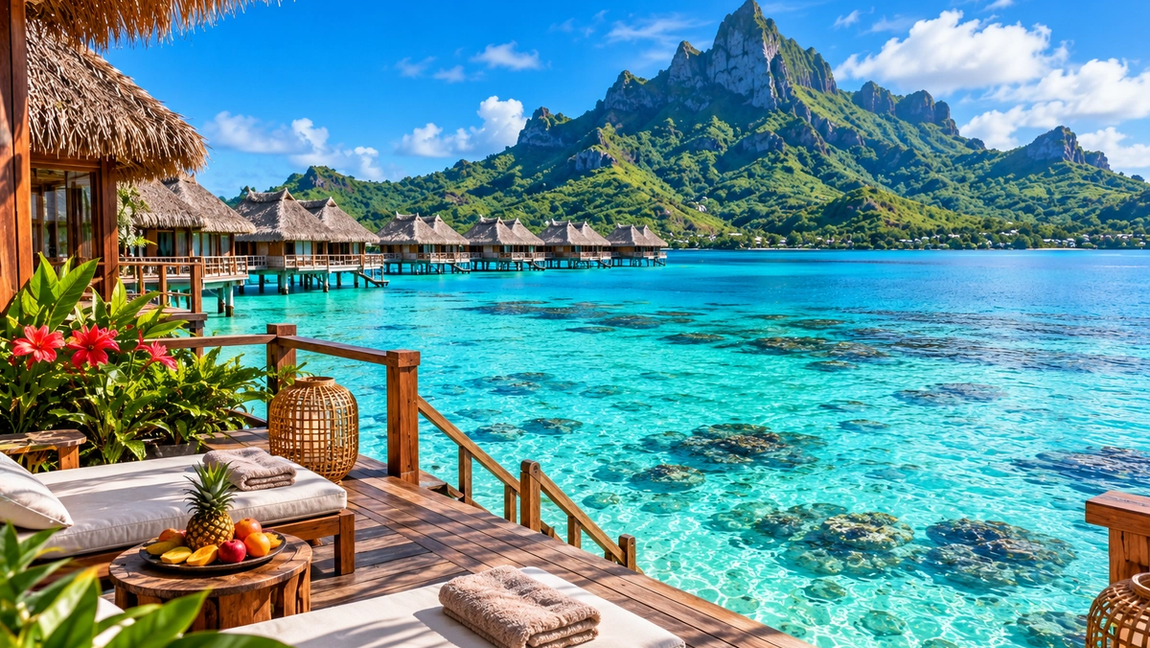
Bora Bora is one of those destinations that looks almost too perfect in photographs.
Then you arrive and discover the water really can be that color.
The island is surrounded by a lagoon and barrier reef, with Mount Otemanu rising dramatically from the center. Overwater bungalows have become the symbol of Bora Bora, but the landscape itself is the real luxury.
Swimming, snorkeling, boat trips, and simply looking at the lagoon can occupy entire days.
Bora Bora is expensive, and reaching French Polynesia requires serious travel from much of the world.
This isn’t necessarily somewhere you casually visit for a long weekend.
But for a once-in-a-lifetime island trip, it makes a convincing case for the journey.
Maui, Hawaii
Hawaii is much more than beautiful beaches, and Maui demonstrates why.
You can spend one day beside the ocean and the next driving through completely different landscapes.
The Road to Hana passes waterfalls, rainforest, and dramatic coastline. Haleakalā rises high above the island, offering a completely different environment from the beaches below.
Maui also provides excellent opportunities for snorkeling, hiking, and exploring volcanic landscapes.
The island’s popularity means thoughtful travel matters. Respect local communities, follow environmental guidance, and remember that Hawaii is a living place rather than simply a vacation product.
The beaches are extraordinary.
The island behind them is even more interesting.
Bali, Indonesia
Bali’s reputation has become complicated.
Some areas are crowded, traffic can be frustrating, and decades of international tourism have transformed parts of the island.
Yet reducing Bali to overcrowded beach clubs misses most of what makes it compelling.
Move beyond the busiest areas and you’ll find rice terraces, temples, volcanic landscapes, villages, waterfalls, forests, and a culture that remains deeply visible in daily life.
Religious offerings appear outside homes and businesses. Ceremonies become part of the rhythm of the island.
Bali works best when you resist trying to see everything.
Choose a few areas and stay longer.
The island becomes far more interesting when you’re not spending half the trip sitting in traffic between attractions.
Palawan, Philippines
If your idea of an island paradise involves limestone cliffs rising from impossibly clear water, Palawan belongs near the top of the list.
El Nido and Coron have become internationally famous for their lagoons, islands, beaches, diving, and boat trips.
The landscape feels almost designed for exploring from the water.
You move between small islands, swim into lagoons, snorkel above reefs, and stop at beaches accessible primarily by boat.
Popular locations can become busy, so choosing tours carefully and traveling outside the busiest periods can improve the experience.
The Philippines contains thousands of islands.
Palawan makes you understand why choosing only one is difficult.
Zanzibar, Tanzania
Zanzibar offers something that many beach destinations don’t: a trip that works just as well away from the beach.
The island’s history reflects centuries of trade and cultural exchange across East Africa, the Middle East, India, and beyond.
Stone Town’s narrow streets, carved doors, markets, and historic buildings reveal that history.
Then there are the beaches.
Long stretches of pale sand and warm Indian Ocean water surround much of the island, particularly along its eastern and northern coasts.
Zanzibar also combines naturally with travel on mainland Tanzania, making it possible to pair a safari with several days beside the ocean.
That’s a difficult combination to beat.
Sri Lanka
Sri Lanka is an island, but treating it purely as a beach destination would be a mistake.
The country packs an extraordinary variety of landscapes and experiences into a relatively compact area.
There are beaches, tea-covered hills, historic cities, wildlife reserves, temples, surf towns, forests, and scenic railway journeys.
You can wake up beside the ocean and, within the same trip, find yourself surrounded by cool mountain landscapes.
The most difficult part is deciding what not to include.
Trying to circle the entire country in a week usually creates more time in vehicles than you’d want.
Choose a region or travel slowly.
Sri Lanka rewards people who give it time.
Mauritius
Mauritius has all the ingredients of a classic tropical island: beaches, warm water, reefs, resorts, and palm trees.
But the interior deserves attention too.
Mountains, waterfalls, hiking trails, botanical gardens, villages, and sugarcane fields make the island much more varied than the resort photographs suggest.
Its population also reflects African, Indian, Chinese, and European influences, particularly through food, religion, language, and festivals.
Spend some time away from the hotel.
Eat somewhere local.
Drive through the island.
A beach becomes more memorable when it belongs to a place you’ve actually started to understand.
Tasmania, Australia
Tasmania offers a completely different version of island travel.
This isn’t tropical paradise.
It’s mountains, forests, rugged coastlines, wildlife, cool water, small towns, and some of Australia’s most impressive wilderness.
Places such as Cradle Mountain-Lake St Clair National Park and Freycinet National Park make the island particularly appealing to hikers and outdoor travelers.
Road trips work beautifully because the distances are manageable while the landscapes change constantly.
Tasmania is the island for people who would happily trade a beach chair for hiking boots.
And after a long day outside, the food and wine don’t hurt either.
The Galápagos Islands, Ecuador
The Galápagos are worth visiting for a reason almost entirely separate from conventional island beauty.
Wildlife is the attraction.
Giant tortoises, marine iguanas, sea lions, seabirds, penguins, and other species inhabit an ecosystem that helped shape Charles Darwin’s thinking about evolution.
What makes the experience extraordinary is how close some wildlife encounters can feel, while strict rules exist to protect the animals and their habitats.
Visiting requires planning and can be expensive.
But this is one of those destinations where the expense and effort support access to something genuinely difficult to experience anywhere else.
Responsible tourism isn’t optional here.
It’s the reason future travelers may still be able to have the same experience.
The Faroe Islands
Sitting in the North Atlantic between Iceland, Norway, and Scotland, the Faroe Islands feel almost deliberately dramatic.
Steep green mountains drop directly into the ocean. Waterfalls fall from cliffs. Small villages sit beneath enormous landscapes.
The weather changes constantly.
You may experience sunshine, fog, wind, and rain in what feels like the same afternoon.
That’s part of the place.
The Faroes are ideal for travelers who want hiking, photography, road trips, and quiet rather than warm beaches.
Some islands require tunnels, ferries, or careful planning to reach, but the journey becomes part of the experience.
Fiji
Fiji is actually an archipelago of hundreds of islands, which means there isn’t one single Fiji experience.
Some travelers stay at comfortable resorts.
Others move between smaller islands, dive, snorkel, surf, hike, or spend time in local communities.
The classic South Pacific scenery is here: clear water, reefs, beaches, and tropical vegetation.
But Fijian culture and hospitality are equally important parts of the experience.
Don’t spend the entire trip behind resort walls.
The more you understand about the place and its people, the less Fiji feels like a generic tropical postcard.
Some places should feel far away
Modern travel has made enormous distances feel strangely ordinary.
You can wake up on one continent and go to sleep on another.
But the best island trips restore some sense of distance.
You travel for hours, cross an ocean, step outside, and immediately know you’ve gone somewhere.
The vegetation is different.
The air feels different.
The landscape doesn’t resemble home.
That’s when the long flight starts making sense.
Not every vacation needs to involve crossing half the planet.
But every once in a while, it’s worth choosing somewhere inconveniently, wonderfully far away.
Because sometimes the places that take the longest to reach are exactly the ones that make you happiest you went.