The Difference Between Camping, Backpacking, and Glamping (And Which Is for You)
Sleeping outside can mean very different things depending on who you ask. For one person, it means driving to a campground, setting up a tent beside the car, cooking dinner over a fire, and spending the evening looking at the stars.
By Gabby Marsh on October 9, 2026
Sleeping outside can mean very different things depending on who you ask.
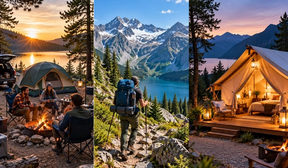
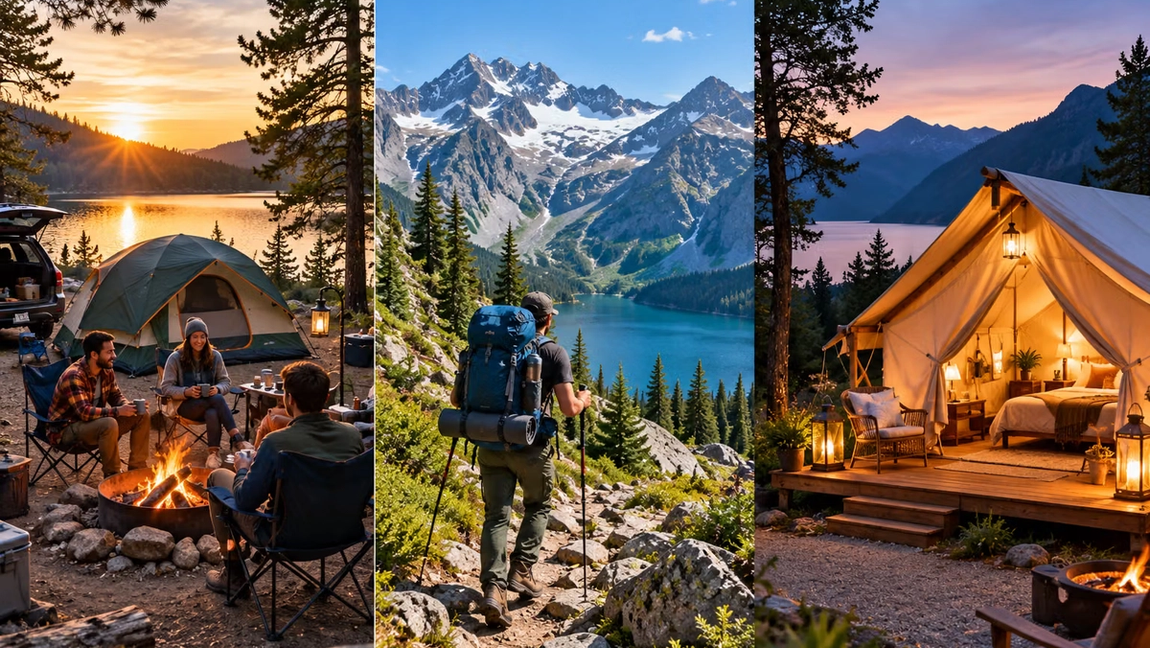
For one person, it means driving to a campground, setting up a tent beside the car, cooking dinner over a fire, and spending the evening looking at the stars. For another, it means carrying everything they need on their back for three days in the mountains. And for someone else, it means sleeping in a beautiful canvas tent with an actual mattress, electricity, and possibly a private bathroom.
All three can offer a way to spend more time in nature.
But camping, backpacking, and glamping involve very different levels of effort, comfort, planning, and adventure. Understanding those differences can help you choose the version of outdoor travel you’ll actually enjoy rather than the one you think you’re supposed to enjoy.
Camping is the classic middle ground
Traditional camping usually means staying at a designated campground or another established outdoor site, often with your car relatively close by.
You bring a tent, sleeping bags or bedding, food, cooking equipment, and whatever else you need for the stay. Depending on the campground, you may also have access to toilets, showers, drinking water, picnic tables, electricity, or fire pits.
The biggest advantage is flexibility.
Because you don’t have to carry everything for kilometers, you can bring heavier and more comfortable equipment. A larger tent, camping chairs, proper cooking supplies, extra blankets, and a cooler full of food are all realistic options.
Camping still gives you the experience of sleeping outdoors without requiring you to become an expert wilderness traveler.
It’s often the easiest place to begin.
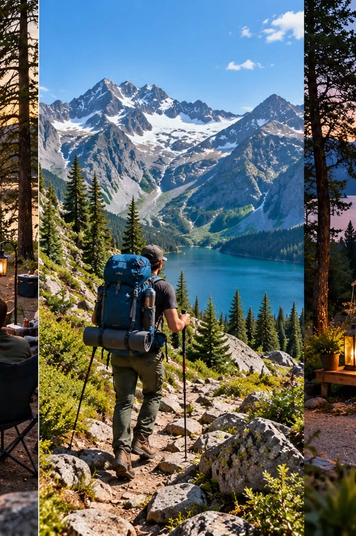
Backpacking takes camping away from the car
Backpacking combines hiking and camping.
Instead of driving to the place where you’ll sleep, you carry your shelter, sleeping system, food, water, clothing, and other essentials in a backpack and hike there.
That changes almost everything.
Weight suddenly matters.
A camping chair that seemed perfectly reasonable at a drive-in campground becomes much less attractive when you have to carry it uphill for six hours. Backpackers often choose smaller tents, lightweight sleeping bags, compact cooking equipment, and carefully planned food.
The reward is access.
Backpacking allows you to spend nights in places that roads cannot easily reach. You can hike deep into mountains, forests, or other remote landscapes and wake up somewhere completely different from a conventional campground.
That feeling of independence is one of backpacking’s biggest attractions.
It also requires more preparation.
Glamping keeps nature and removes some discomfort
Glamping, short for glamorous camping, takes a different approach.
Instead of asking how little you can survive with, it asks how comfortable sleeping in nature can become.
A glamping site might involve a furnished canvas tent, yurt, dome, treehouse, cabin, or another semi-outdoor accommodation. Many include proper beds, electricity, heating, bathrooms, and sometimes surprisingly luxurious amenities.
You still get many of the appealing parts of camping: quiet mornings, natural surroundings, outdoor meals, dark skies, and distance from city life.
But you may not need to pitch a tent, sleep on the ground, or wonder how you’re going to shower.
For people who love nature but strongly dislike traditional camping, that’s not cheating.
It’s simply a different type of trip.
The comfort levels are completely different
Comfort may be the easiest way to understand the three experiences.
Glamping usually provides the most. Traditional camping sits somewhere in the middle. Backpacking generally asks you to sacrifice the most comfort in exchange for mobility and access to more remote places.
But comfort is subjective.
An experienced backpacker may sleep perfectly well in a lightweight tent after hiking all day. Someone else may spend the entire night thinking about the hotel they could have booked.
Neither person is doing nature incorrectly.
Knowing your own tolerance matters.
If poor sleep makes you miserable, forcing yourself into an extremely minimalist backpacking trip probably won’t magically turn you into an outdoors person.
Start with the version that makes you excited to go.
Backpacking requires the most careful packing
Packing for a camping trip can be forgiving.
Forget an extra sweater and you may have another one in the car. Bring too much food and the cooler simply becomes heavier.
Backpacking is less forgiving because every unnecessary object eventually becomes something you’re carrying.
You need enough equipment to stay safe and reasonably comfortable without making your backpack unnecessarily heavy. Food has to be planned. Water sources need to be researched. Weather matters. Navigation becomes more important.
The physical demands are also greater.
Walking several kilometers with a loaded backpack feels very different from hiking with a small daypack.
For that reason, a first backpacking trip should usually be relatively manageable rather than an ambitious expedition.
You can always go farther next time.
Camping is often better for groups
Traditional camping works particularly well for social trips.
You can arrive with friends, set up several tents, cook together, play games, sit around a fire where permitted, and spend the weekend outdoors without needing everyone to have the same hiking ability.
There’s also more room for shared equipment.
One person brings the stove. Someone else brings food. Another person brings the giant tent they somehow insist takes only five minutes to assemble.
Backpacking can absolutely be social too, but the physical challenge becomes a larger part of the experience.
Glamping works well for groups that want the atmosphere of an outdoor trip without making equipment and setup the main event.
Cost isn’t as simple as it looks
Camping appears inexpensive, and after you’ve purchased the equipment, it often can be.
But getting started may require a tent, sleeping bags, sleeping mats, cooking equipment, lights, and other gear.
Backpacking equipment can become even more expensive because lightweight, compact gear often costs more.
You don’t need the most expensive equipment available, especially as a beginner. Renting or borrowing gear can be a much better way to discover whether you actually enjoy the activity before investing heavily.
Glamping requires less personal equipment but usually costs more per night because you’re paying for prepared accommodation and amenities.
In other words, one option costs more in gear, while another may cost more in bookings.
So which one is actually for you?
If you want an accessible introduction to sleeping outdoors, traditional camping is probably the easiest starting point. You get plenty of nature while keeping your car, extra supplies, and basic facilities relatively close.
If the idea of carrying everything you need into the wilderness sounds exciting rather than horrifying, backpacking may be your version. It requires more preparation and physical effort, but it can take you far beyond the places most visitors reach.
If you love mountains, forests, stars, and quiet mornings but have absolutely no interest in sleeping on the ground, glamping makes perfect sense.
And you don’t have to choose one identity forever.
You can backpack through the mountains one weekend, camp beside a lake the next, and happily book a heated glamping tent when the weather gets cold.
The outdoors isn’t a competition over who can tolerate the least comfort.
The best version is the one that makes you want to go outside again.