The Hiking Gear Worth Paying For (And the Stuff You Can Skip)
Then you enter an outdoor store and discover an entire industry suggesting that walking requires specialized trousers, technical shirts, carbon-fiber poles, satellite devices, hydration systems, ultralight cookware, and a jacket expensive enough to require its own insurance policy.
By Avishai Sam on October 8, 2026
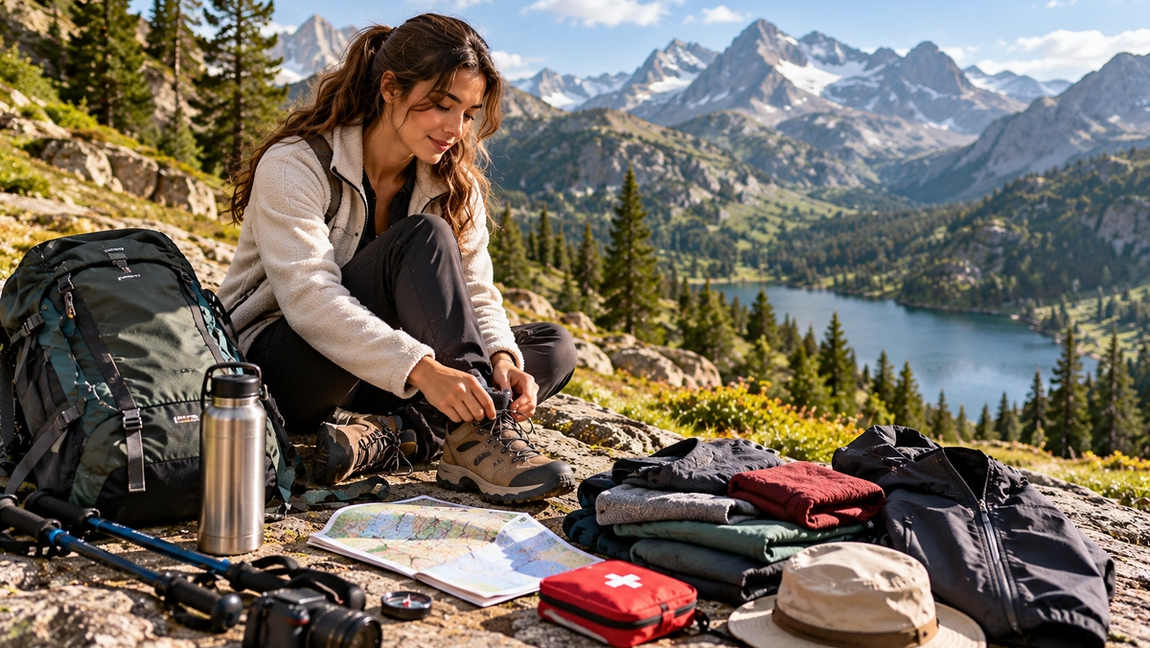
Hiking can be one of the simplest outdoor activities imaginable.
You walk somewhere beautiful and eventually walk back.
Then you enter an outdoor store and discover an entire industry suggesting that walking requires specialized trousers, technical shirts, carbon-fiber poles, satellite devices, hydration systems, ultralight cookware, and a jacket expensive enough to require its own insurance policy.
Some hiking gear genuinely matters. Some becomes important only on longer or more difficult trips. And plenty of it is unnecessary for someone walking a popular trail for a few hours.
The trick is knowing where better equipment improves comfort or safety and where you’re mostly paying for features you won’t use.
Good footwear is worth getting right
Your footwear affects almost every step of the hike, which makes it one of the smartest places to prioritize quality and fit.
That doesn’t automatically mean buying heavy hiking boots.
For maintained trails in good weather, comfortable trail-running shoes or other suitable walking shoes may be enough. Boots become more useful when you need additional protection, durability, or traction for rough terrain and difficult conditions.
Fit matters more than the logo.
Your toes need enough room, your heel shouldn’t constantly slide, and nothing should create painful pressure points. Try footwear with the socks you expect to hike in and, ideally, walk around before committing to a long trail.
Most importantly, don’t save brand-new hiking shoes for the morning of a major hike.
A beautiful mountain is a terrible place to discover your shoes are destroying your feet.
A backpack should be comfortable before it is impressive
For a short hike, you don’t need an expedition pack.
You need enough room for water, food, extra clothing, basic safety supplies, and whatever else the conditions require.
The longer and heavier the load becomes, the more backpack design matters.
Good shoulder straps, sensible weight distribution, ventilation, and a supportive hip belt can make a noticeable difference on longer hikes.
This is another category where fit matters more than price alone.
An expensive backpack that doesn’t fit your torso properly can be less comfortable than a cheaper one that does.
Try the bag with some weight inside it whenever possible. Empty backpacks are extremely good at pretending they’ll be comfortable later.
Spend on weather protection when conditions justify it
Weather can transform a pleasant hike very quickly.
A reliable waterproof shell is one of the pieces of outdoor clothing worth considering if you regularly hike in places where rain, wind, or rapidly changing conditions are common.
You don’t necessarily need the most expensive technical jacket available.
What matters is having something appropriate for the environment that provides the protection you actually need.
For occasional short hikes with predictable weather and easy access back to shelter, simpler equipment may be completely adequate.
For mountain environments, long hikes, or places known for rapidly changing conditions, dependable weather protection becomes much more important.
This is the broader rule with hiking equipment: consequences determine how much performance matters.
Don’t underestimate socks
People will spend hundreds on hiking boots and then wear whatever socks happen to be clean.
Socks are inexpensive compared with most hiking gear, but they can have an enormous effect on comfort.
Well-fitting hiking socks made from materials that manage moisture effectively can help reduce friction and keep your feet more comfortable.
Merino wool and synthetic materials are popular because they generally handle moisture better than ordinary cotton socks.
You don’t need a drawer containing 20 pairs of premium hiking socks.
A few good pairs are enough.
This is one of the rare gear upgrades where a relatively small amount of money can noticeably improve the experience.
Your clothing doesn’t need to say “hiking”
Technical outdoor clothing can be excellent.
It can also be unnecessary.
If you already own comfortable athletic clothing that dries reasonably quickly and works in the expected weather, you may already have much of what you need.
For mild day hikes, there’s little reason to replace your entire wardrobe simply because your existing clothes weren’t marketed beside a photograph of a mountain.
As trips become longer, colder, wetter, or more remote, technical materials become more valuable.
Layering also matters more than individual brands.
Being able to add or remove clothing as your temperature changes is usually more useful than owning one extremely expensive hiking outfit.
Trekking poles are useful, but not everyone needs them
Trekking poles can improve stability on uneven ground and may be particularly helpful during steep climbs, long descents, river crossings, or hikes where balance is challenging.
They can also take some of the load during repetitive movement.
But they aren’t mandatory equipment for every walk.
If you’re hiking an easy, relatively flat trail for two hours, buying premium carbon trekking poles probably isn’t the first place your money needs to go.
If you regularly hike steep terrain or simply find poles make walking more comfortable, they may become one of your favorite pieces of equipment.
Try them before assuming you need them.
Navigation is worth taking seriously
You don’t necessarily need to buy a dedicated GPS device for ordinary hiking.
A phone with a reliable mapping app and the route downloaded for offline use may be sufficient on many established trails.
But don’t rely on having mobile reception.
Know your route before starting, carry enough battery power, and understand the basic trail markings and map information you’re using.
For remote or complicated routes, additional navigation tools and the skills to use them may be appropriate.
The expensive part isn’t necessarily the important part.
A €500 GPS device is useless if you don’t understand your route.
A downloaded map can be incredibly valuable if you do.
Don’t cheap out on essential safety equipment
What counts as essential depends on the hike.
A two-hour trail near a populated area requires different preparation from a full-day route through remote mountains.
But basic supplies such as adequate water, food, weather protection, sun protection, a light source, and appropriate first-aid items deserve space in your pack.
On more remote trips, emergency communication equipment may also become important, particularly where mobile coverage is unreliable.
The further you travel from easy assistance, the more self-sufficient you need to become.
This is where spending decisions should be based on consequences rather than convenience.
You can tolerate a cheap T-shirt.
You don’t want your critical safety equipment failing when you genuinely need it.
You can skip most hiking gadgets at the beginning
You probably don’t need a specialized hiking watch before your first hike.
You don’t need titanium utensils for a day trip.
You don’t need an expensive hydration vest for a casual forest walk.
You don’t need three different technical jackets because someone online created a 25-minute layering tutorial.
And you definitely don’t need to replace perfectly functional equipment simply because a lighter version exists.
Ultralight equipment becomes valuable for people carrying everything over long distances because small weight savings eventually add up.
For an occasional day hiker, paying a large premium to save 80 grams may provide almost no meaningful benefit.
Start with the problem.
Then buy the equipment that solves it.
Upgrade after your gear tells you what is wrong
Your first few hikes will teach you more about your equipment needs than hours of shopping.
Maybe your backpack makes your shoulders hurt.
Maybe your shoes are excellent but your socks cause blisters.
Maybe you’re constantly cold during breaks and need a better insulating layer.
Maybe your inexpensive rain jacket works perfectly and you don’t need to replace it at all.
Those are useful discoveries because they’re based on your actual experience.
Buy upgrades when you understand what needs improving.
Spend where failure would ruin the hike
The best hiking gear isn’t necessarily the most expensive.
It’s dependable, comfortable, appropriate for the environment, and familiar enough that you know how to use it.
Prioritize footwear that fits. Carry enough water. Use a backpack that feels comfortable. Prepare properly for weather and navigation. Invest in dependable safety equipment when your routes demand it.
Then be skeptical of everything else.
Hiking doesn’t become more legitimate because your equipment costs more.
If your gear keeps you comfortable and safe while letting you forget about it and enjoy the trail, it’s doing exactly what you paid for.