The Foods Worth Traveling For (And Where to Find Them)
Some people choose destinations for beaches. Others choose them for museums, architecture, mountains, or history.
By Moran Sapir on October 9, 2026
Some people choose destinations for beaches.
Others choose them for museums, architecture, mountains, or history.
And then there are the people who will happily take a three-hour train because someone told them there is a particular pasta they need to eat.
Food can be one of the best reasons to travel because it gives you something a photograph never can. You can find versions of famous dishes almost anywhere now, but eating something where it developed adds context. The ingredients are different. The traditions make more sense. The dish belongs to the weather, the landscape, and the rhythm of the place.
Some foods are good enough to justify the journey on their own.
Pizza in Naples, Italy
Pizza exists almost everywhere.
Naples still makes it feel like a different food.
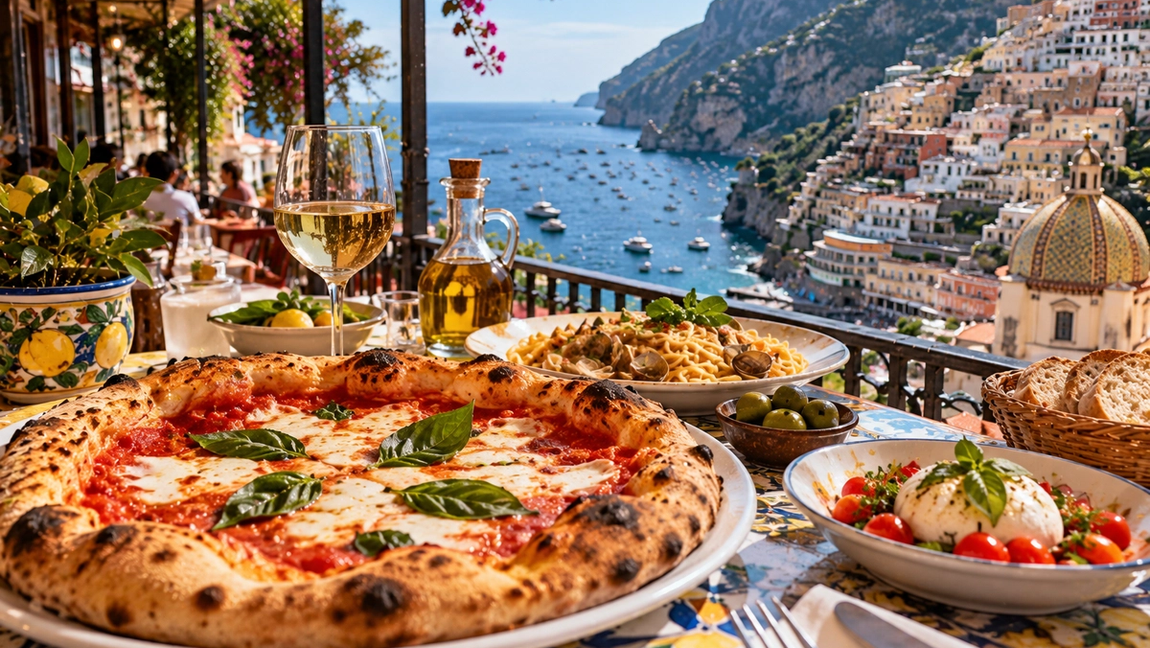
Traditional Neapolitan pizza is relatively simple: soft, elastic dough with a puffed, charred crust, tomato, cheese, and a small number of toppings. The pizza cooks extremely quickly in a very hot oven, leaving the center softer than many international styles.
The classic choices are equally straightforward. A marinara usually combines tomato, garlic, oregano, and olive oil, while a Margherita adds mozzarella and basil.
Part of the experience is how ordinary pizza feels in Naples.
This isn’t special-occasion food. Pizzerias are everywhere, and some of the most famous versions remain remarkably uncomplicated.
Come hungry.
You will probably decide you need to conduct extensive comparative research.
Sushi in Tokyo, Japan
You can eat excellent sushi far beyond Japan.
Tokyo still offers an extraordinary range of it.
At one end are celebrated restaurants where chefs serve carefully structured omakase meals. At the other are casual sushi counters and conveyor-belt restaurants where you can eat extremely well without turning lunch into a major financial event.
What changes in Tokyo is the depth of the culture surrounding the food.
Seafood, rice preparation, temperature, knife work, seasoning, and timing all receive enormous attention.
You don’t need to understand every detail to appreciate the result.
And don’t make the mistake of believing expensive automatically means better for your trip. A small neighborhood sushi restaurant may become one of your favorite meals.
Tacos in Mexico City, Mexico
Mexico City could support an entire food trip without you ever entering a formal restaurant.
Tacos are the obvious place to start.
Al pastor, suadero, carnitas, barbacoa, tacos de guisado, and countless other variations demonstrate why treating “tacos” as one single food barely makes sense.
Some of the best experiences happen standing beside a busy taquería while someone assembles your food in seconds.
Follow the crowd.
Notice which stalls stay consistently busy.
Try different styles instead of repeatedly ordering the one taco you already recognize.
And use salsa with appropriate humility until you understand what you’re dealing with.
Croissants in Paris, France
A croissant seems too ordinary to justify traveling for.
Then you eat a really good one in Paris.
The exterior shatters slightly when you bite it. The inside is soft, airy, buttery, and layered. It doesn’t need fillings, elaborate toppings, or social-media presentation.
It barely needs a plate.
Paris has extraordinary restaurants, but one of the city’s great food experiences costs only a few euros and happens before you’ve properly started your day.
Find a good neighborhood boulangerie, buy a croissant while it’s fresh, and eat it while walking.
Then repeat tomorrow for scientific accuracy.
Pho in Hanoi, Vietnam
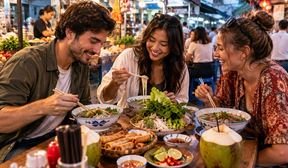
Pho demonstrates how much complexity can hide inside something that initially looks simple.
The dish combines broth, rice noodles, herbs, meat, and carefully balanced aromatics. Regional differences matter, and the northern style associated with Hanoi tends to be relatively restrained compared with some versions found farther south.
Eating pho in Hanoi also teaches you something about how the city eats.
Small restaurants and street-side establishments can be busy early in the day. You sit down, eat, and continue with your morning.
It isn’t presented as an exotic national dish.
It’s breakfast.
That’s often when travel food becomes most interesting: when something famous to visitors is completely normal to the people who live there.
Paella in Valencia, Spain
Paella has traveled so widely that its original identity can get lost.
Valencia is where you go to understand it.
Traditional Valencian paella differs from the seafood-heavy versions many visitors associate with the dish. Rice is the foundation, and the cooking method, pan, stock, heat, and development of the prized toasted layer at the bottom all matter.
Paella is also traditionally connected with communal eating.
It’s not simply a bowl of rice ordered because you’re in Spain.
Seek out restaurants known specifically for rice dishes and, when possible, avoid choosing solely based on photographs displayed outside heavily tourist-oriented restaurants.
The best version may look less dramatic than the menu picture.
It will probably taste considerably better.
Kebabs in Gaziantep, Türkiye
Türkiye has an enormous food culture, and reducing it to kebabs would be ridiculous.
But Gaziantep makes an excellent argument for planning a trip around eating.
The city is internationally recognized for its culinary traditions, with dishes built around local ingredients, spices, meats, vegetables, pistachios, and generations of technique.
Kebabs here come in numerous forms, and meals are often surrounded by breads, salads, dips, and other dishes that make ordering “a kebab” sound hilariously incomplete.
Gaziantep also has another reason to visit hungry.
Baklava.
You should probably begin accepting now that this will not be a light eating weekend.
Bánh mì in Vietnam
Vietnam’s bánh mì reflects history inside a sandwich.
The baguette arrived through French colonial influence and was transformed through Vietnamese ingredients and tastes.
The result can combine crisp bread with meats, pâté, pickled vegetables, herbs, chili, sauces, and other fillings.
Different cities and vendors make different versions, which makes bánh mì perfect travel food.
It’s affordable, portable, fast, and endlessly variable.
You don’t need a reservation.
You need a good vendor and enough appetite to try another one later.
Sometimes the food worth traveling for isn’t a three-hour dinner.
It’s something handed to you wrapped in paper.
Curry in India
Saying you should travel to India for “curry” is a little like saying you should travel to Europe for “bread.”
The category is far too broad.
That’s exactly why India belongs on a food travel list.
Regional cuisines differ enormously. The food of Punjab isn’t the food of Kerala. Goan cuisine reflects different ingredients and historical influences from what you’ll encounter in Rajasthan, West Bengal, Tamil Nadu, or Hyderabad.
Travel within India and the spices, cooking fats, breads, rice dishes, vegetables, meats, seafood, and preparation methods change with you.
The lesson is not to find India’s best curry.
It’s to stop thinking there could possibly be only one.
Pastéis de nata in Lisbon, Portugal
Some foods are best experienced as small daily rituals.
Pastéis de nata are one of them.
These Portuguese custard tarts combine crisp, flaky pastry with a creamy baked filling, often finished with cinnamon or powdered sugar.
They are available throughout Portugal, and arguing about the best one can become a surprisingly serious activity.
In Lisbon, the famous Pastéis de Belém attracts enormous attention, but excellent versions can also be found in bakeries throughout the city.
The ideal approach is obvious.
Try several.
This isn’t indecision.
It’s research.
Barbecue in the American South
American barbecue isn’t one cuisine.
Different regions have developed distinct traditions around meats, woods, sauces, seasonings, and cooking techniques.
Texas is famous for brisket. The Carolinas have strong pork traditions. Memphis is closely associated with ribs and pulled pork. Kansas City has another recognizable barbecue culture of its own.
The differences are substantial enough that barbecue enthusiasts can argue about them indefinitely.
That’s what makes it worth traveling for.
A road trip through barbecue regions becomes a lesson in how food traditions change across surprisingly short distances.
Just don’t schedule five major barbecue meals in one day.
Ambition has limits.
Gelato in Italy
Gelato may not require a separate trip if you’re already traveling through Italy.
But it absolutely justifies repeated stops once you’re there.
Good gelato emphasizes flavor rather than giant mountains of brightly colored presentation.
Pistachio should taste like pistachio. Lemon should taste intensely of lemon. Chocolate should make you briefly question whether you need dinner.
Part of the pleasure is frequency.
You don’t need to plan a major gelato experience.
You’re walking somewhere.
You see a good gelateria.
You stop.
This may happen twice in one day.
Nobody needs to know.
Food is one of the fastest ways into a culture
You can learn a surprising amount about a place by looking at what people eat.
Climate determines ingredients. Geography shapes agriculture. Religion influences what is avoided or celebrated. Migration introduces new flavors. Trade brings spices and techniques. Poverty creates ingenious ways of transforming inexpensive ingredients. Wealth creates different traditions. History leaves traces in recipes long after political borders change.
That’s why the best travel meals aren’t always the fanciest ones.
Sometimes it’s pizza eaten at a crowded table in Naples.
A taco eaten standing on a Mexico City sidewalk.
Pho early in the morning in Hanoi.
A warm pastry from a Lisbon bakery.
The food matters.
But where you’re eating it matters too.
And once you’ve had a dish in the place that made you understand why people love it, every version you eat afterward carries a little bit of that trip with it.