The Coffee Cultures Worth Experiencing at Least Once
In one country, coffee means standing at a counter for three minutes before work. Somewhere else, it means sitting with friends for two hours over a tiny cup. It can be brewed slowly in a traditional pot, pulled quickly from an espresso machine, filtered with almost scientific precision, or served as part of a ceremony that turns drinking coffee into a social event.
By Avishai Sam on October 9, 2026
Coffee can be the same basic drink and a completely different experience depending on where you order it.
In one country, coffee means standing at a counter for three minutes before work. Somewhere else, it means sitting with friends for two hours over a tiny cup. It can be brewed slowly in a traditional pot, pulled quickly from an espresso machine, filtered with almost scientific precision, or served as part of a ceremony that turns drinking coffee into a social event.
That’s what makes coffee culture worth traveling for. You’re not simply trying different beans or brewing methods. You’re seeing how different places have built rituals around one of the world’s most familiar drinks.
Even if you’re not obsessed with coffee, these are experiences worth having at least once.
Espresso at the bar in Italy
Italian coffee culture is built around simplicity, speed, and habit.
Walk into a traditional bar in the morning and you’ll see people ordering espresso or cappuccino, drinking it quickly, exchanging a few words, and continuing with their day. In many places, standing at the counter is part of the experience and may cost less than sitting at a table.
Coffee terminology matters too. Order a “caffè” and you’ll generally receive an espresso. Cappuccino is strongly associated with breakfast and morning drinking, while espresso continues throughout the day.
What makes Italian coffee culture memorable isn’t elaborate presentation.
It’s how completely coffee is integrated into daily life.
A tiny espresso can mark the beginning of the morning, the end of lunch, or a brief pause in the afternoon.
It isn’t an event.
It’s punctuation.
Turkish coffee in Türkiye
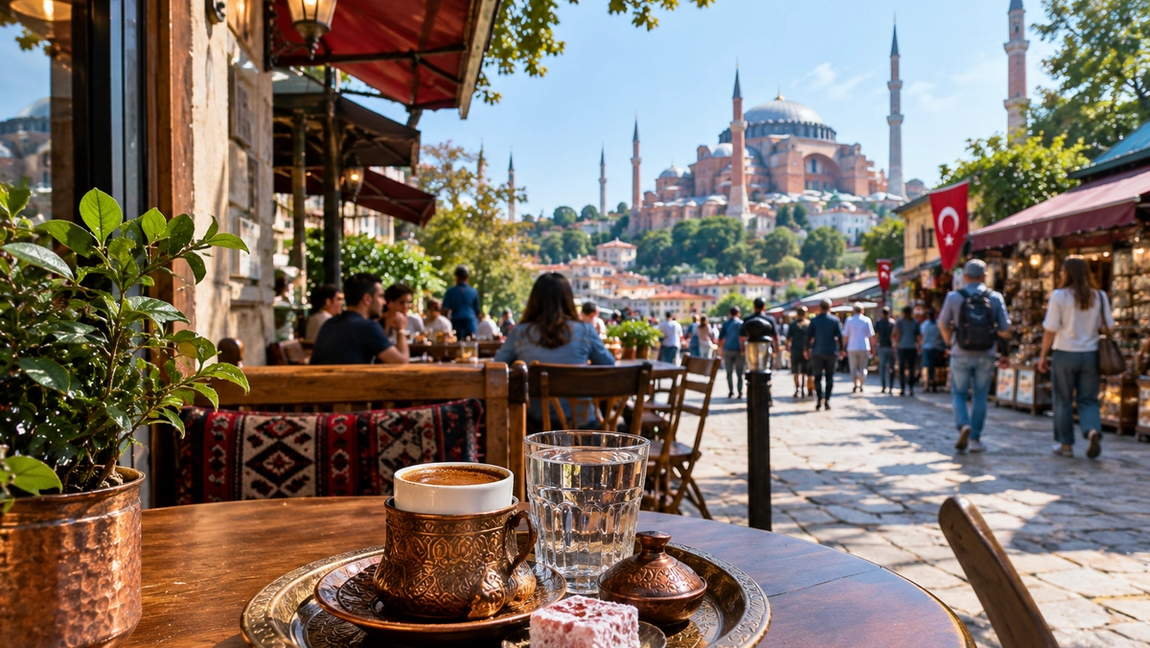
Turkish coffee asks you to slow down.
Finely ground coffee is traditionally prepared in a small pot called a cezve and served unfiltered in a small cup. The grounds settle at the bottom, so this isn’t coffee you casually drink to the final drop.
The preparation creates a strong, concentrated drink with a distinctive texture.
But Turkish coffee is about more than caffeine.
It has long been connected with hospitality, conversation, social gatherings, and traditions surrounding fortune-telling from the coffee grounds left in the cup.
Order one somewhere traditional and don’t rush it.
Drink slowly.
Talk.
Let the grounds settle.
The entire point is that this cup of coffee takes up a little space in your day.
The coffee ceremony in Ethiopia
To understand coffee’s history, Ethiopia is essential.
The country is widely associated with coffee’s origins, and coffee remains deeply embedded in social and cultural life.
A traditional Ethiopian coffee ceremony can involve roasting green coffee beans, grinding them, brewing coffee in a jebena, and serving several rounds to guests.
The process can take considerable time.
That’s precisely why it’s meaningful.
The ceremony transforms coffee from something consumed quickly into an act of hospitality and connection.
The smell of freshly roasted beans becomes part of the experience, as does sitting together while the coffee is prepared.
If much of modern coffee culture is about speed, the Ethiopian ceremony offers almost the opposite philosophy.
The waiting matters.
Café life in Vienna, Austria
Vienna demonstrates that sometimes the most important ingredient in coffee culture is the chair.
Traditional Viennese coffeehouses aren’t designed to get you out quickly. Historically, they became places where writers, artists, intellectuals, politicians, and ordinary residents could sit, read newspapers, talk, think, and work.
Coffee was part of the experience, but so was time.
That tradition still influences the atmosphere of the city’s classic cafés.
Order coffee, perhaps add a slice of cake, and settle in.
There are multiple traditional Viennese coffee preparations to explore, but you don’t need to memorize the entire menu beforehand.
The larger lesson is cultural.
A café can function almost like a public living room.
You aren’t only paying for the coffee.
You’re paying for permission to stay.
Fika in Sweden
Swedish fika is frequently translated as a coffee break, but that description misses the social importance of the ritual.
Fika means deliberately stopping.
Coffee is usually involved, often alongside something sweet such as a cinnamon bun, but the central idea is the pause itself.
You might have fika with coworkers, friends, family, or someone you’re getting to know.
The habit reflects something easy to forget in productivity-obsessed cultures: taking a break doesn’t necessarily mean you’re wasting time.
Sometimes the break is the point.
Experiencing fika in Sweden makes coffee feel less like fuel and more like an excuse to reconnect with another person.
The cinnamon bun certainly doesn’t make the philosophy harder to accept.
Specialty coffee in Melbourne, Australia
Melbourne has developed one of the world’s most recognizable modern café cultures.
Coffee here is taken seriously, but the atmosphere doesn’t necessarily feel formal.
Independent cafés, skilled baristas, carefully sourced beans, espresso-based drinks, and brunch culture have all become part of the city’s identity.
The flat white is closely associated with Australian and New Zealand coffee culture, although arguments over its precise origins can become surprisingly passionate.
You don’t need to join that debate.
Order one.
Then pay attention to how much effort goes into something that appears so simple.
Melbourne is particularly interesting because its coffee culture shows how immigrant traditions, especially Italian espresso culture, can evolve into something distinctly local over generations.
Coffee shops in Copenhagen, Denmark
Copenhagen’s coffee scene reflects the broader Scandinavian enthusiasm for lighter-roasted specialty coffee.
Here, the flavor of the bean itself often takes center stage.
Coffee may taste brighter, fruitier, or more acidic than someone accustomed to dark roasts expects.
The city’s best specialty cafés tend to approach sourcing, roasting, brewing temperature, and preparation with enormous attention.
Yet the experience can still feel relaxed rather than technical.
You can learn about coffee if you want.
Or you can simply sit somewhere beautiful with an excellent filter coffee and watch Copenhagen pass outside.
Sometimes expertise works best when the customer doesn’t need to think about how much work went into it.
Café culture in Paris, France
Parisian café culture isn’t necessarily about finding the world’s most technically perfect cup of coffee.
It’s about where you’re drinking it.
Tables face outward toward the street. People sit close together. Someone reads. Someone argues. Someone has been occupying the same tiny table much longer than seems economically reasonable.
Coffee becomes part of watching city life.
Historically, Parisian cafés became important gathering places for writers, artists, philosophers, revolutionaries, and political movements.
Modern cafés have changed, and Paris now has a substantial specialty coffee scene as well.
But the classic experience remains worth having.
Sit outside.
Order coffee.
Do absolutely nothing productive for a while.
Paris provides the entertainment.
Vietnamese coffee in Vietnam
Vietnamese coffee is difficult to confuse with almost anything else.
Traditional preparation often uses a small metal phin filter that slowly drips strong coffee into a cup. Sweetened condensed milk is commonly added, producing the famous cà phê sữa đá when served over ice.
It’s strong, sweet, cold, and exceptionally effective at convincing you that another one is a good idea.
Vietnam also has distinctive regional coffee drinks.
Hanoi is particularly associated with egg coffee, which combines coffee with a rich, whipped egg mixture. Coconut coffee and other variations demonstrate how creatively the country’s coffee culture has evolved.
Sit on a small stool beside a busy street and suddenly the traffic, noise, heat, and coffee become one experience.
Coffee in Sarajevo, Bosnia and Herzegovina
Sarajevo’s coffee culture carries strong Ottoman influence while having its own Bosnian identity.
Traditional Bosnian coffee is prepared and served in a way that encourages slow drinking and conversation. It may arrive in a džezva alongside a small cup, sugar, and something sweet.
The experience makes particular sense in Sarajevo’s historic Baščaršija district.
Here, coffee isn’t something you grab while walking somewhere else.
You sit.
You talk.
You watch people pass.
One coffee can comfortably occupy much more time than its size would suggest.
Across much of the Balkans, that idea feels familiar: coffee is rarely only about coffee.
It’s often the excuse for the conversation.
Japan’s kissaten and modern coffee scene
Japan offers two fascinating coffee experiences at once.
Traditional kissaten are old-style coffee shops that can feel wonderfully removed from modern café trends. Many have dark interiors, careful brewing methods, quiet atmospheres, and owners who have been preparing coffee for decades.
Then there’s Japan’s contemporary specialty coffee scene, where precision can reach remarkable levels.
Pour-over coffee may be prepared with extraordinary attention to water temperature, timing, grind size, and technique.
Both versions share something important.
Care.
Coffee isn’t treated as something that needs to be rushed simply because it’s familiar.
The best coffee cultures aren’t really about coffee
You can buy good coffee in thousands of cities.
What makes a coffee culture memorable is everything surrounding the cup.
The Italian espresso makes sense because you drink it quickly at the bar.
Turkish coffee makes sense because you sit with it.
Ethiopian coffee becomes meaningful through ceremony and hospitality.
Vienna permits you to stay.
Sweden gives you permission to stop.
Paris gives you a reason to watch the street.
Vietnam turns coffee into something unmistakably its own.
And Sarajevo reminds you that sometimes saying “let’s have coffee” actually means “let’s sit together for the next two hours.”
That’s why coffee is such an interesting way to understand a place.
The ingredients may be similar.
The ritual tells you where you are.