The Cities Worth Visiting at Least Once in Your Life
There is no objective list of cities everyone needs to visit before they die. Some people want ancient streets and museums. Others want skyscrapers, street food, nightlife, beaches, architecture, or simply the feeling of being somewhere completely unlike home.
By Lila Odin on October 9, 2026
There is no objective list of cities everyone needs to visit before they die.
Some people want ancient streets and museums. Others want skyscrapers, street food, nightlife, beaches, architecture, or simply the feeling of being somewhere completely unlike home.
But certain cities offer something bigger than a collection of attractions. They have an atmosphere you understand only after being there. You’ve seen their landmarks hundreds of times in photographs, yet standing in the middle of them still feels different.
If you’re building a lifetime travel list rather than planning one specific vacation, these are the kinds of cities worth making room for.
Rome, Italy
Rome occasionally feels less like a city and more like several thousand years of history that people happen to be living inside.
You can walk past ancient ruins on your way to get coffee, turn a corner and find a Renaissance palace, then end the afternoon eating pasta beside a building older than entire countries.
The Colosseum and Roman Forum deserve their fame, but Rome becomes more interesting when you stop moving exclusively between major attractions. Walk through Trastevere. Visit neighborhood churches. Drink an espresso standing at a bar. Sit in a piazza with nowhere urgent to be.
And then there is Vatican City sitting inside Rome, adding another extraordinary layer of art, religion, architecture, and history.
Rome isn’t polished everywhere.
That’s part of why it feels alive.
Tokyo, Japan
Tokyo demonstrates just how enormous a city can be without feeling like one single place.
Shibuya is different from Asakusa. Shinjuku feels different from Ginza. Harajuku, Ueno, Akihabara, and Shimokitazawa can almost seem like separate cities connected by an extraordinarily efficient transportation system.
The contrast is what makes Tokyo fascinating.
You can move from neon-covered streets and giant railway stations to quiet shrines and residential neighborhoods within minutes.
Food alone could justify the trip. Tiny ramen counters, convenience-store snacks, sushi restaurants, department-store food halls, izakayas, bakeries, and elaborate tasting menus all exist within the same city.
Tokyo can initially feel overwhelming.
Then the system starts making sense, and somehow a city of millions begins to feel surprisingly manageable.
Paris, France
Paris suffers from being photographed too much.
You’ve seen the Eiffel Tower so many times that it can feel almost ordinary before you arrive.
Then you see it from across the Seine.
Paris is one of those places where the famous version and everyday version constantly overlap.
There is the Louvre, Notre-Dame, Musée d’Orsay, Arc de Triomphe, and grand Haussmann architecture. But there are also bakeries opening early in the morning, neighborhood markets, crowded café terraces, tiny parks, bookstores, and people carrying baguettes home.
Don’t try to conquer Paris attraction by attraction.
Walk.
Sit somewhere.
Choose one museum instead of attempting three.
The city rewards people who leave enough time to notice it.
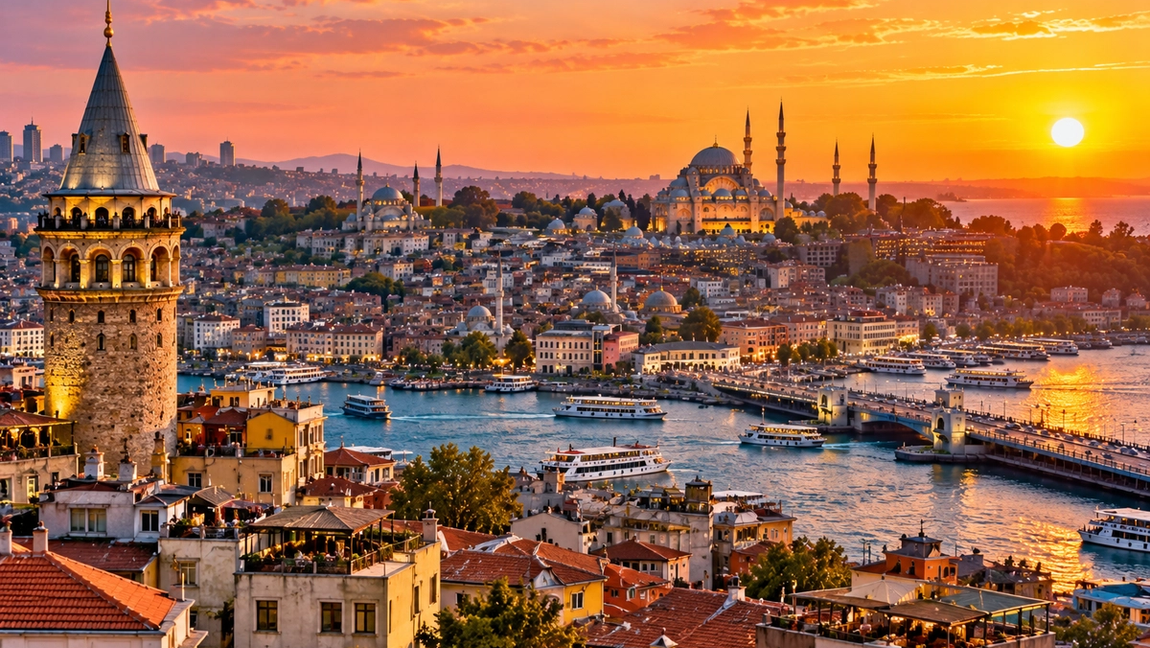
Istanbul, Türkiye
Few cities make geography feel as dramatic as Istanbul.
The city stretches across Europe and Asia, divided by the Bosphorus but connected by ferries that are themselves one of the best ways to experience the place.
Its history is equally layered.
Roman, Byzantine, Ottoman, and modern Turkish influences exist beside one another. Hagia Sophia, the Blue Mosque, Topkapı Palace, bazaars, contemporary neighborhoods, waterfront mansions, and busy shopping streets all belong to the same enormous city.
Take the ferry.
Drink tea while watching the skyline.
Eat more than you planned to.
Istanbul is a city where crossing from one neighborhood to another can completely change the mood of your day.
New York City, United States
New York is one of the rare cities that can feel familiar before you’ve ever visited.
Movies, television, music, photography, and books have turned its streets into global cultural references.
Being there breaks that illusion.
New York is louder, messier, faster, more ordinary, and more interesting than its fictional version.
Times Square is worth seeing once, but it isn’t the city.
Walk through Greenwich Village. Spend an afternoon in Central Park. Cross the Brooklyn Bridge. Explore neighborhoods outside Manhattan. Eat something from a place with six tables and a line outside.
New York works best when you combine iconic sights with completely normal city life.
Marrakech, Morocco
Marrakech engages almost every sense at once.
The medina is a maze of narrow streets, shops, workshops, courtyards, cafés, food stalls, motorcycles, colors, sounds, and movement.
Then you step through an ordinary-looking doorway and discover a peaceful riad built around a quiet courtyard.
That contrast is central to the experience.
Marrakech can feel intense, especially for first-time visitors, but that’s also what makes it memorable.
Take time to understand the medina rather than simply rushing through it. Visit gardens and palaces, eat Moroccan food beyond the most tourist-heavy squares, and allow yourself to get slightly lost when it’s safe to do so.
The city isn’t designed to be consumed efficiently.
Mexico City, Mexico
Mexico City deserves far more attention than many first-time visitors expect.
It combines extraordinary museums, enormous parks, historic architecture, contemporary culture, and one of the world’s great food scenes.
You can spend the morning exploring the historic center, eat tacos from a tiny stand for lunch, visit the National Museum of Anthropology in the afternoon, and spend the evening in neighborhoods filled with restaurants and cafés.
Chapultepec alone could occupy a substantial part of a day.
The city’s scale means you shouldn’t try to see everything.
Choose neighborhoods and explore them properly.
Mexico City becomes much more rewarding when you stop treating it as a checklist.
Cape Town, South Africa
Cape Town has something many major cities can’t manufacture: extraordinary geography.
Table Mountain rises directly behind the city while the Atlantic Ocean stretches out in front of it.
You can hike in the morning, explore neighborhoods in the afternoon, and watch the sunset beside the ocean in the evening.
The surrounding region adds even more: beaches, dramatic coastal drives, vineyards, and nature are all within reach.
But Cape Town’s beauty exists alongside a complicated history and significant social and economic inequality.
Understanding the city means engaging with both.
It is visually spectacular, culturally complex, and unlike almost anywhere else.
Barcelona, Spain
Barcelona feels like a city designed by someone who occasionally decided normal buildings were too boring.
Antoni Gaudí’s architecture gives the city some of its most recognizable landmarks, from the Sagrada Família to Park Güell and Casa Batlló.
But Barcelona is more than Gaudí.
Its Gothic Quarter, markets, beaches, plazas, food culture, and Mediterranean atmosphere make it particularly easy to enjoy without constantly planning activities.
Spend time walking through different neighborhoods.
Eat slowly.
Stay outside late.
Barcelona’s greatest attraction may simply be how naturally daily life seems to happen outdoors.
London, England
London contains enough history, culture, food, neighborhoods, and museums to fill repeated visits.
The obvious landmarks are worth seeing: Westminster, Tower Bridge, Buckingham Palace, the Tower of London, and the Thames.
But London’s real strength is variety.
An afternoon in Notting Hill feels different from one in Shoreditch. Camden is different from Greenwich. South Kensington’s museums offer a completely different experience from a walk through Borough Market.
London also makes an excellent city for people who like simply wandering.
You can follow the Thames, disappear into a park, enter a museum, find a pub, and accidentally spend an entire day without following your original itinerary.
The best city is the one that changes how you see cities
You don’t need to visit 100 countries or collect cities like achievements.
A great city trip isn’t measured by how many landmarks you photographed.
It’s measured by what stayed with you.
Maybe Tokyo changes what you think public transportation can be. Istanbul changes how you understand the meeting of cultures. Rome makes ancient history feel real. New York shows you the energy of extreme urban density. Cape Town demonstrates how closely a city can exist beside wilderness.
And sometimes the thing you remember isn’t famous at all.
It’s a breakfast you still think about.
A street you accidentally found.
A conversation with someone you’ll never meet again.
Or the strange moment when you arrive somewhere thousands of kilometers from home and think, unexpectedly, I could live here.
Those are the cities worth traveling for.