The Camping Gear Every Beginner Actually Needs
Camping gear can get ridiculous very quickly. You start looking for a tent and somehow end up watching someone explain why you need a titanium cooking pot, an ultralight chair, a solar-powered shower, three different knives, and a tiny table specifically designed to hold your tiny camping stove.
By Gabby Marsh on October 8, 2026
Camping gear can get ridiculous very quickly.
You start looking for a tent and somehow end up watching someone explain why you need a titanium cooking pot, an ultralight chair, a solar-powered shower, three different knives, and a tiny table specifically designed to hold your tiny camping stove.
For your first camping trip, you don’t need most of that.
Beginner camping gear has one main job: keep you sheltered, warm enough, fed, hydrated, and reasonably comfortable.
Everything else can come later.
Start with the right tent
Your tent is one of the few pieces of beginner camping gear worth choosing carefully.
You don’t necessarily need an expensive one, but you do need something appropriate for the weather and large enough for the people sleeping inside.
Tent capacity can be misleading. A two-person tent often means there is technically enough floor space for two sleeping people, not necessarily two people plus backpacks, shoes, and everything else you’ve brought.
If you’re car camping and weight isn’t important, choosing a slightly larger tent can make the experience much more comfortable.
Practice setting it up at home before the trip.
The middle of a dark campsite while it starts raining is an unfortunate time to discover you’ve never seen your tent poles before.
Your sleeping bag needs to match the temperature
A sleeping bag isn’t just a blanket with a zipper.
It’s part of your insulation system.
Choose one with a temperature rating appropriate for the conditions you’re likely to experience, and remember that nighttime temperatures can be dramatically colder than daytime ones.
Temperature ratings also don’t guarantee that every person will feel equally warm. Some people naturally sleep colder than others.
If you’re unsure, prepare for temperatures slightly lower than the forecast rather than assuming the warm afternoon weather will continue through the night.
Being slightly too warm is usually easier to solve than lying awake at 3 a.m. wearing every item of clothing you brought.
Don’t forget the sleeping pad
Beginners sometimes spend heavily on a sleeping bag and then put it directly on the tent floor.
That’s a mistake.
A sleeping pad provides cushioning, but more importantly, it helps insulate you from the ground.
The ground can pull heat away from your body surprisingly quickly.
Sleeping pads are often given an R-value, which indicates their resistance to heat loss. Higher values generally provide more insulation.
For mild-weather camping, your needs may be relatively simple. Cold-weather camping requires much more attention to insulation.
For your first trip, comfort matters too.
A miserable night’s sleep is an excellent way to decide you hate camping when you may actually just hate sleeping on hard ground.
Bring reliable light
Your phone flashlight is useful.
It shouldn’t be your entire lighting system.
A headlamp is one of the simplest and most useful pieces of camping equipment because it leaves both hands free.
That’s valuable when you’re cooking, setting up camp after sunset, searching through your tent, or walking to the bathroom at night.
A small lantern can also make the campsite more comfortable, but it isn’t essential if everyone has a reliable headlamp.
Bring spare batteries or make sure rechargeable lights are fully charged before leaving.
Camping becomes remarkably complicated when nobody can see anything.
You need water and a plan for getting more
Don’t simply assume there will be safe drinking water at the campsite.
Check beforehand.
At developed campgrounds, potable water may be available. At primitive or remote campsites, you may need to bring all your water or treat water from natural sources.
For car camping, large water containers are easy to transport and useful for drinking, cooking, and cleaning.
For backcountry trips, water treatment becomes much more important.
Filters, purification tablets, or other appropriate treatment methods may be necessary depending on the environment.
Clear mountain water can look perfect and still contain microorganisms capable of ruining your trip.
Know your water source before leaving home.
Keep your cooking setup simple
Your first camping kitchen doesn’t need to look like a restaurant.
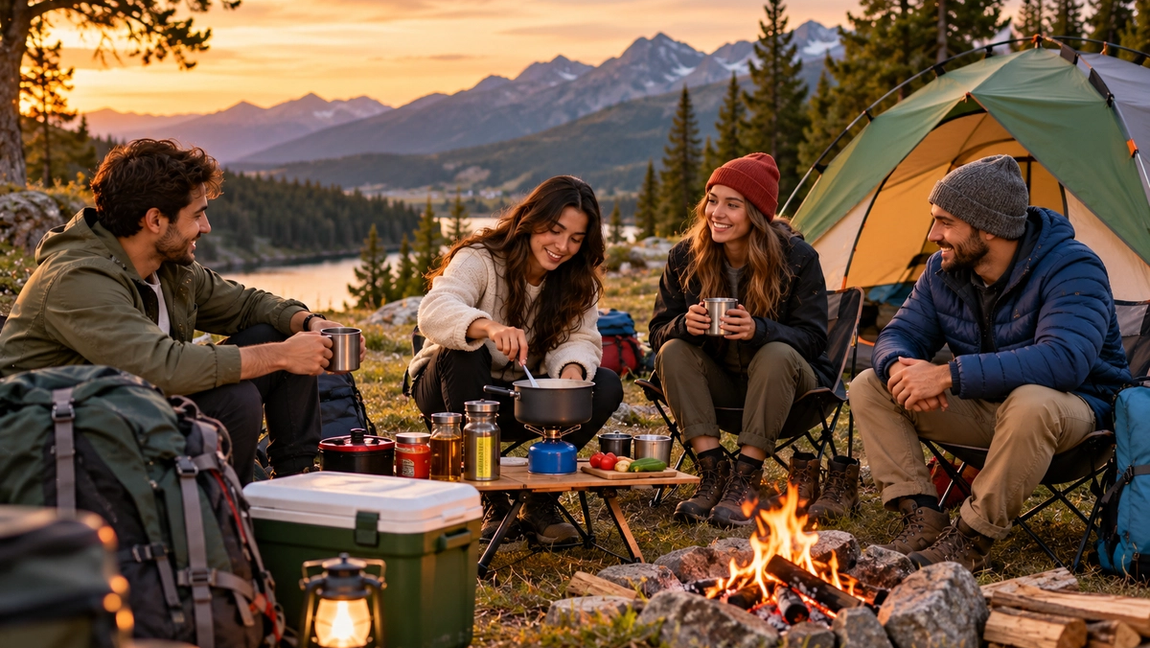
A basic camping stove, appropriate fuel, lighter or ignition method, one pot or pan, simple utensils, plates or bowls, and something to clean them with can cover most meals.
Choose food that’s easy to prepare.
Camping is probably not the ideal setting for attempting a complicated six-stage recipe for the first time.
Sandwiches, pasta, oatmeal, wraps, rice dishes, grilled foods, and other straightforward meals can work extremely well.
And check fire restrictions before planning to cook over an open fire.
A campfire should never be your only cooking plan.
Pack clothes for conditions, not photographs
Outdoor temperatures change quickly.
Layering gives you flexibility.
A basic system might include comfortable base clothing, a warmer layer such as a fleece or sweater, and a waterproof or weather-resistant outer layer when conditions require it.
Bring appropriate footwear and extra socks.
Cotton clothing can become uncomfortable in wet and cold conditions because it holds moisture, so quick-drying materials can be useful when weather or activity levels make getting wet likely.
You don’t need an entirely new outdoor wardrobe for a beginner camping trip.
You need clothing that keeps you reasonably comfortable in the actual forecast.
Food storage is part of camping safely
Your food isn’t interesting only to you.
Wildlife may be extremely interested in it too.
Food-storage rules depend on where you’re camping. Some areas provide lockers, while others may require bear-resistant containers or specific storage methods.
Food, rubbish, scented toiletries, and other attractants may all need to be stored appropriately.
Never assume keeping food inside your tent is harmless.
Check the rules for the specific campground or park you’re visiting and follow local wildlife guidance.
Protecting your food is part of protecting wildlife as well.
Animals that learn to associate campsites with easy meals can become persistent and dangerous.
Bring a basic first-aid kit
Small injuries become considerably more inconvenient when the nearest pharmacy is far away.
A simple first-aid kit should match the length, location, activities, and size of your group.
For an ordinary campground trip, basic wound-care supplies and any personal medications may cover many common situations.
More remote trips require more preparation.
Sun protection and insect protection can also matter depending on the destination and season.
The point isn’t to prepare for every disaster imaginable.
It’s to handle ordinary problems without immediately needing to abandon the trip.
A few practical items make everything easier
Some camping essentials aren’t exciting enough to appear in glamorous gear videos.
Rubbish bags are one of them.
Bring enough to pack out everything you bring in.
Toilet paper may also be worth carrying even when you’re staying at a developed campground. A small repair kit or some strong tape can temporarily solve damaged equipment. A power bank can keep your phone available for navigation and communication.
A map or downloaded offline map is useful whenever phone reception may be unreliable.
And always tell someone where you’re going and when you expect to return if you’re camping somewhere remote.
None of these items looks particularly impressive arranged beside a tent.
You’ll appreciate them when you need them.
Don’t buy everything before your first trip
One of the smartest things a beginner can do is borrow or rent equipment.
You don’t yet know what kind of camper you’re going to become.
Maybe you’ll love comfortable car camping with a big tent and proper chairs. Maybe you’ll eventually want to backpack through remote mountains carrying everything yourself. Maybe you’ll camp twice and decide hotels are one of humanity’s greatest inventions.
All three outcomes are fine.
Start with the essentials.
A suitable tent, sleeping bag, sleeping pad, light, water, basic cooking equipment, weather-appropriate clothing, safe food storage, and basic safety supplies can take you surprisingly far.
Then go camping.
After a night or two outside, you’ll know exactly what you wish you’d brought.
That’s usually a much better shopping list than anything the internet can give you.