The Best Times of Year to Visit America’s Most Beautiful Places
The same place can feel like an entirely different destination depending on when you visit. A national park that is peaceful in October can be packed in July. A desert that feels perfect in February can become dangerously hot in summer. A mountain road that provides access to spectacular viewpoints in September may still be buried under snow in May.
By Alex Slavistki on October 8, 2026
The same place can feel like an entirely different destination depending on when you visit.
A national park that is peaceful in October can be packed in July. A desert that feels perfect in February can become dangerously hot in summer. A mountain road that provides access to spectacular viewpoints in September may still be buried under snow in May.
That makes timing one of the most important parts of planning a nature-focused trip across the United States.
There is rarely one universally “best” month. The right time depends on what you want: hiking weather, waterfalls, fall colors, wildlife, snow, fewer crowds, or simply access to the places you came to see.
Yosemite is spectacular in spring and early fall
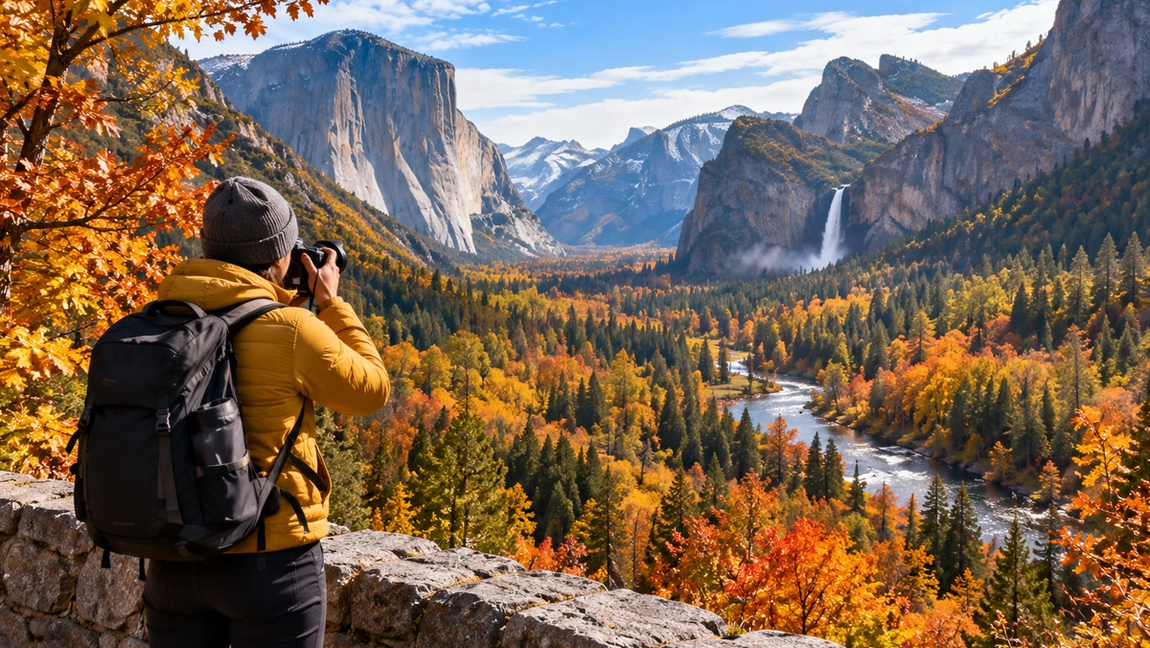
Yosemite National Park in California changes dramatically throughout the year.
Spring is especially impressive because melting mountain snow feeds the park’s famous waterfalls. Yosemite Falls and other waterfalls are typically much stronger than they are later in the year, while the valley begins turning green.
Summer brings easier access to higher-elevation areas as seasonal roads and trails open, but it also brings some of the year’s biggest crowds.
Early fall offers a different balance. The waterfalls may be much smaller, but temperatures can be comfortable and the busiest summer period has passed.
Winter transforms Yosemite again. Snow can make the valley beautiful, but some higher-elevation areas and roads become inaccessible.
The best season therefore depends on whether your priority is waterfalls, high-country access, or quieter scenery.
Yellowstone changes completely with the seasons
Yellowstone National Park is famous for geysers, hot springs, wildlife, and enormous landscapes, but weather determines how much of the park you can easily explore.
Summer offers the greatest general accessibility, making it easier to visit many of Yellowstone’s major attractions. It is also the busiest period.
Late spring can be particularly interesting for wildlife and changing landscapes, although snow and seasonal closures can still affect plans.
September and early autumn can be excellent for travelers who want cooler weather and fewer visitors while many roads remain accessible.
Winter is an entirely different Yellowstone experience. Snow covers much of the landscape, and ordinary vehicle access becomes limited in many areas. For travelers prepared for specialized winter transportation and cold conditions, however, the park can feel dramatically quieter.
The Grand Canyon is often better outside midsummer
The Grand Canyon is frequently associated with summer road trips, but midsummer isn’t necessarily the easiest time to experience it.
Temperatures inside the canyon can become extremely high, creating serious challenges for hikers.
Spring and fall generally offer more comfortable conditions, especially for visitors planning to walk below the rim.
The South Rim is the most accessible part of the park and remains open throughout the year, although winter can bring snow, ice, and cold temperatures.
The North Rim has a much shorter visitor season because winter weather limits access.
This is a perfect example of why checking conditions for the specific part of a national park you’re visiting matters. “Grand Canyon weather” can mean very different things depending on your elevation and location.
Zion is especially appealing in spring and fall
Zion National Park in Utah combines enormous sandstone cliffs with some of America’s most recognizable hiking routes.
Spring and fall are often attractive because temperatures are generally more comfortable than during the hottest part of summer.
Summer can bring significant heat and crowds. It also overlaps with the Southwest’s monsoon season, when thunderstorms can create flash-flood risks in narrow canyons.
That is particularly important for routes involving slot canyons or river travel.
Winter is quieter and can be beautiful, although snow and ice may affect higher or shaded trails.
Zion rewards flexibility. Conditions can change quickly, so the best trip isn’t simply about choosing a good month. It’s also about checking current weather and trail information once you’re there.
New England belongs to autumn
Few seasonal travel experiences are as strongly associated with one time of year as fall in New England.
Vermont, New Hampshire, Maine, Massachusetts, and surrounding areas become famous for forests turning red, orange, yellow, and gold.
The exact timing varies from year to year and by location. Northern and higher-elevation areas generally change earlier, while southern locations tend to peak later.
That unpredictability is part of the experience.
Instead of planning around one supposedly perfect date, it can be better to build some flexibility into an autumn road trip.
Popular foliage destinations can also become extremely busy, especially on weekends. Visiting during the week or exploring beyond the most famous towns can make the experience much more enjoyable.
Alaska shines during its short summer
Alaska’s enormous size makes broad seasonal advice difficult, but summer is the easiest introduction for many first-time visitors.
Long daylight hours provide extraordinary amounts of time for sightseeing, hiking, wildlife viewing, and road trips. Many seasonal tourism services also operate primarily during the warmer months.
June through August is therefore popular for good reason.
But the edges of the season can be interesting too.
Late spring and early autumn may offer fewer visitors, although weather becomes less predictable and some businesses or services may have reduced schedules.
Travelers hoping to see the northern lights generally need darker nights than Alaska’s bright summer provides, making late summer through winter more suitable depending on the region.
In Alaska, deciding what you want to experience should come before deciding when to go.
Acadia is hard to beat in early fall
Acadia National Park in Maine combines mountains, forests, rocky Atlantic coastline, and scenic roads in a relatively compact area.
Summer provides warm weather and long days, but it is also extremely popular.
Early fall can offer a particularly appealing combination of cooler hiking temperatures and changing foliage.
Later in the season, however, weather becomes colder and some seasonal services begin winding down.
Spring tends to be quieter, but conditions can be wet and muddy.
Acadia demonstrates an important travel rule: shoulder season can sometimes offer a better experience than the period traditionally considered peak season.
Death Valley belongs to the cooler months
Some destinations aren’t simply less comfortable during the wrong season. They can become genuinely dangerous.
Death Valley National Park is one of them.
Summer temperatures can reach extreme levels, making outdoor activities risky and severely limiting what many visitors can comfortably do.
Late fall through early spring generally provides much more suitable conditions for exploring.
Winter days can be pleasantly mild at lower elevations, while spring may occasionally bring wildflowers when rainfall and other conditions align.
The desert is still an environment that demands preparation, including carrying sufficient water and understanding how remote some areas are.
Beautiful doesn’t automatically mean forgiving.
The best season depends on what you’re willing to trade
Perfect weather usually attracts more people.
Fewer crowds may mean colder temperatures. Spectacular waterfalls may come with wet trails. Fall colors last only briefly. Mountain access may require waiting until summer.
Every season involves a trade-off.
Instead of asking only, “When is the best time to visit?” ask what you most want to experience.
Do you want to hike? See wildlife? Photograph snow? Avoid crowds? Drive every scenic road? See waterfalls at their strongest?
Once you know that, the calendar becomes much easier to understand.
America’s most beautiful landscapes don’t have one perfect season.
They have different versions of beautiful throughout the year.