How to Choose the Right Backpack for Any Trip
Buying a travel backpack seems simple until you start looking. Suddenly you’re comparing 28-liter daypacks with 40-liter carry-ons, hiking packs with internal frames, clamshell openings, hip belts, laptop compartments, waterproof materials, compression straps, and enough technical vocabulary to make buying a bag feel like purchasing climbing equipment.
By Roi Kadosh on October 8, 2026
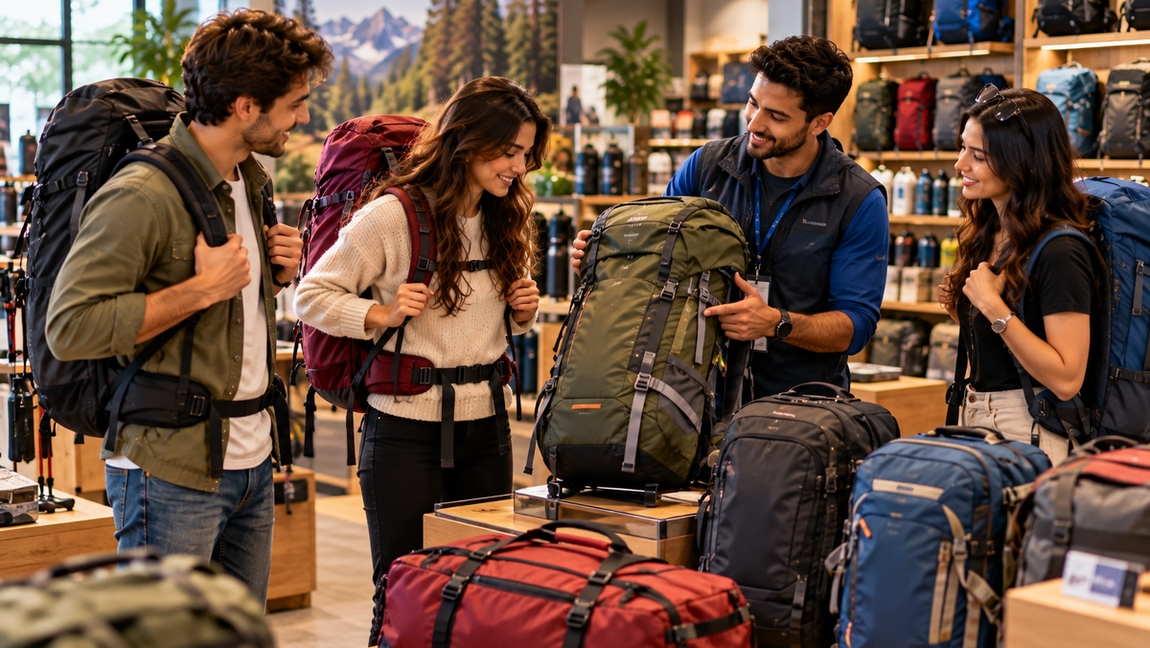
Buying a travel backpack seems simple until you start looking.
Suddenly you’re comparing 28-liter daypacks with 40-liter carry-ons, hiking packs with internal frames, clamshell openings, hip belts, laptop compartments, waterproof materials, compression straps, and enough technical vocabulary to make buying a bag feel like purchasing climbing equipment.
The truth is that there isn’t one perfect backpack.
A great bag for a weekend in Paris may be terrible for a five-day mountain trek. A backpack designed for hiking may be unnecessarily complicated for someone who mostly travels between airports and hotels.
The right backpack depends on what you’re carrying, how long you’ll carry it, and where you’re taking it.
Start with the trip, not the backpack
Before comparing brands or features, think about how you’ll actually travel.
Are you flying somewhere for a weekend and walking from the airport to a hotel? Are you backpacking through several countries and changing accommodation every few days? Are you hiking for hours while carrying food, water, and outdoor equipment?
These trips require different bags.
For city travel, organization and easy access may matter most. For hiking, comfort and weight distribution become much more important. For air travel, dimensions can matter as much as capacity because airline baggage limits determine whether your backpack qualifies as a personal item or carry-on.
Don’t buy the most technical backpack.
Buy the one designed for something closest to what you’re actually doing.
Understand what liters actually mean
Backpacks are usually described by capacity in liters.
A small daypack might hold around 15 to 25 liters. Bags around 25 to 35 liters can work well for short trips or minimalist travelers. Around 35 to 45 liters is common territory for travelers trying to fit everything into one carry-on-sized backpack.
Larger bags can make sense for long outdoor trips or situations requiring substantial equipment, but more capacity isn’t automatically better.
A larger backpack creates a powerful temptation to fill it.
Then you have to carry everything you decided to bring simply because there was space available.
Choose the smallest capacity that comfortably fits what you genuinely need.
Check airline dimensions, not just capacity
A backpack being advertised as “carry-on size” doesn’t guarantee that every airline will accept it.
Airlines use physical dimensions and weight limits, and those rules can vary significantly.
Two 40-liter backpacks can also have completely different shapes. One may fit neatly into an overhead compartment while another is too tall or deep.
If you’re buying primarily for air travel, compare the backpack’s external measurements with the baggage rules of airlines you commonly use.
Remember that an overstuffed soft backpack can become larger than its listed dimensions.
Compression straps can help, but they cannot make an enormous bag magically qualify as a personal item.
Fit matters more than almost everything else
A backpack can have excellent reviews and still be wrong for your body.
Torso length, shoulder shape, height, and build all affect how a pack feels.
For bags you’ll carry for significant periods, adjustable shoulder straps and a supportive hip belt can dramatically improve comfort.
A properly fitted hip belt helps transfer some of the load away from your shoulders and toward your hips. That’s particularly valuable when hiking or carrying heavier loads.
If possible, try the backpack with weight inside it.
An empty pack can feel comfortable in a shop and completely different after you’ve added eight kilograms of belongings.
Walk around.
Adjust the straps.
If something already feels wrong after five minutes, don’t assume it will become delightful after five hours.
Decide how you want the bag to open
Traditional backpacks often open from the top.
That works well in many outdoor situations but can become annoying during travel.
If the shirt you want is at the bottom, you may have to remove half your belongings to reach it.
Clamshell or panel-opening travel backpacks open more like suitcases, giving you access to most of the interior at once.
For city travel and frequent accommodation changes, this can be extremely convenient.
Top-loading designs still make sense for hiking and other outdoor uses where the bag’s shape, simplicity, and load distribution may matter more than suitcase-style access.
Neither system is universally better.
Think about how often you’ll need to reach your belongings during the trip.
Don’t underestimate organization
More pockets don’t automatically make a backpack better.
Sometimes they simply create more places to lose your charger.
Look for organization that matches what you carry.
If you travel with a laptop, a padded compartment with easy access can be valuable, especially at airports. External water-bottle pockets are useful if you carry one regularly. A small secure pocket can keep your passport or wallet accessible without putting them in the main compartment.
The interior should still be flexible enough to pack efficiently.
Too many fixed compartments can make a backpack surprisingly difficult to use.
Good organization should reduce searching, not dictate exactly how every centimeter must be packed.
Pay attention to the backpack’s empty weight
Some backpacks are heavy before you’ve put anything inside them.
Extra padding, frames, wheels, thick materials, and elaborate organization can all add weight.
For airlines with strict cabin baggage limits, that matters.
A backpack weighing two kilograms empty has already consumed a significant portion of an eight-kilogram allowance.
Outdoor packs require a different calculation because additional structure may improve comfort when carrying heavier loads.
The goal isn’t always choosing the lightest possible bag.
It’s making sure the weight you’re adding provides something useful.
Weather resistance matters, but waterproof means something specific
Many travel backpacks are water-resistant rather than completely waterproof.
That’s often enough for moving between transportation and accommodation during ordinary rain.
If you’ll spend significant time outdoors, especially in unpredictable weather, stronger protection may be necessary.
A rain cover or waterproof internal liner can provide additional protection for hiking trips.
Important electronics and documents can also be kept inside waterproof pouches or bags.
Don’t assume a backpack will protect everything during heavy rain simply because the fabric feels technical.
Check what the manufacturer actually claims.
Hiking backpacks need different priorities
If your trip involves serious hiking, choose a backpack designed for it.
Ventilation, torso adjustment, load distribution, hip-belt comfort, hydration compatibility, and attachment points for equipment may become far more important than laptop compartments.
For overnight or multi-day hiking, capacity depends on your shelter, sleeping system, food, water, weather, and other equipment.
This is also where proper fit becomes especially important.
Carrying a poorly fitted backpack through an airport is annoying.
Carrying one over a mountain for eight hours can become miserable.
Durability is worth paying for if you travel often
Backpacks experience a surprising amount of abuse.
They get thrown onto buses, pushed under airplane seats, dragged across floors, squeezed into luggage racks, exposed to rain, and repeatedly opened and closed.
Strong zippers, reinforced stitching, durable fabric, and reliable buckles matter more than decorative features.
If you travel frequently, paying more for a well-built backpack can make sense.
If you’re taking one short trip, you probably don’t need expedition-level equipment.
Price should reflect how much you’re actually going to use the bag.
The right backpack should make travel easier
A good backpack shouldn’t require constant attention.
It should fit comfortably, hold what you need, work with your transportation, and allow you to reach important belongings without unpacking your entire life onto a station floor.
Don’t choose based on how adventurous the backpack makes you look.
Choose based on the trip.
For a weekend, that may be a small daypack. For carry-on travel, it may be a structured 30-to-40-liter bag. For trekking, it may be a properly fitted hiking pack designed to carry weight comfortably.
The best backpack isn’t the one with the longest feature list.
It’s the one you can carry for the entire trip without wishing you’d left half of it at home.