How to Actually Leave No Trace (The Real Rules of the Outdoors)
“Leave no trace” sounds simple: go outside, enjoy the place, and don’t leave garbage behind. But responsible outdoor travel involves much more than carrying your snack wrappers home.
By Avishai Sam on October 8, 2026
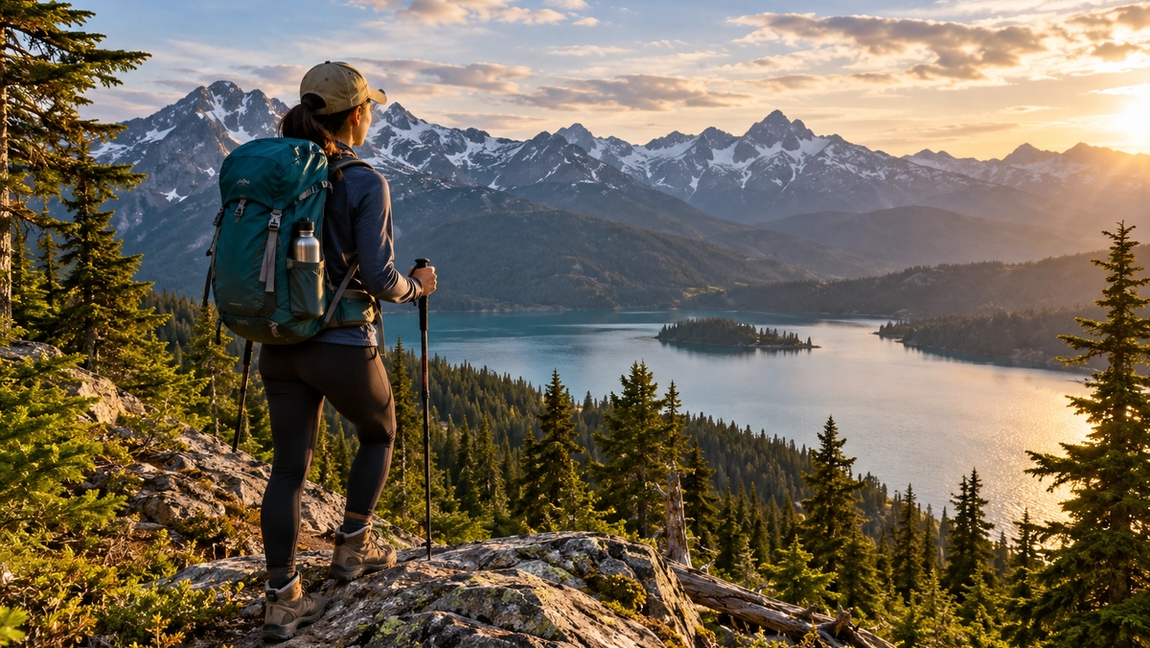
“Leave no trace” sounds simple: go outside, enjoy the place, and don’t leave garbage behind.
But responsible outdoor travel involves much more than carrying your snack wrappers home.
A trail can be damaged without anyone intentionally destroying it. A shortcut across vegetation, an abandoned orange peel, a campfire in the wrong place, or getting too close to wildlife can seem insignificant when one person does it. Multiply that behavior by thousands of visitors, and the impact becomes much harder to ignore.
The basic idea behind Leave No Trace is straightforward: enjoy natural places while changing them as little as reasonably possible.
That requires understanding what your presence actually does.
Plan before you arrive
Responsible outdoor behavior starts before the hike.
Research the place you’re visiting. Find out whether permits are required, where camping is allowed, whether fires are permitted, how waste should be handled, and whether there are seasonal restrictions.
Different environments have different vulnerabilities.
A durable rocky trail may tolerate heavy foot traffic relatively well, while delicate alpine vegetation can be damaged by people repeatedly stepping off the path.
Planning also reduces the likelihood that you’ll make bad decisions because you’re unprepared.
If you know there won’t be trash bins, you can bring something for carrying waste. If water isn’t available, you can carry enough. If fires are prohibited, you can plan another way to cook.
Preparation isn’t only about your comfort.
It protects the place you’re entering.
Stay on durable surfaces
That muddy section of trail may look annoying.
Walking around it can make the problem worse.
When hikers repeatedly step off the established path, the trail gradually becomes wider. Vegetation gets trampled, soil becomes compacted, and unofficial side paths begin appearing.
Whenever possible, stay on established trails.
At campsites, use existing camping areas where regulations allow rather than creating a new flattened patch simply because another spot looks prettier.
In more remote environments without established trails, the appropriate approach depends on the terrain and local guidance. Some durable surfaces can tolerate travel better than fragile vegetation.
The general principle is simple: avoid creating damage that the next visitor will inherit.
Pack out more than obvious garbage
Nobody is surprised that plastic bottles and food packaging shouldn’t be left in nature.
The less obvious problem is biodegradable waste.
Orange peels, banana skins, apple cores, sunflower seeds, and other food scraps are still waste when they’re left somewhere they don’t belong.
Something being biodegradable doesn’t mean it disappears overnight.
Food can take time to break down, look unpleasant, introduce material that isn’t naturally present in that environment, and attract wildlife toward areas frequented by humans.
The easiest rule is to treat everything you brought with you as something you should expect to carry back out.
That includes the tiny things.
If you wouldn’t throw it on the floor of your living room, the forest probably doesn’t need it either.
Human waste requires actual planning
Eventually, every outdoor guide has to discuss toilets.
If proper restroom facilities exist, use them.
In remote areas, the correct method for handling human waste varies depending on the environment and local regulations. In some places, properly burying solid human waste may be appropriate. In sensitive or heavily visited environments, visitors may be required to pack it out entirely.
This is one area where generic advice isn’t enough.
Check the rules for the specific place you’re visiting.
Toilet paper and hygiene products also require attention. Depending on local requirements, they may need to be packed out rather than buried.
It isn’t the glamorous part of outdoor travel.
It is still part of responsible outdoor travel.
Leave the interesting things where they are
A beautiful rock seems harmless to take.
So does a shell, flower, piece of wood, or other natural souvenir.
The problem appears when thousands of visitors have the same idea.
Natural objects are part of the environment. They may provide habitat, nutrients, protection, or simply part of the character of the landscape.
Cultural and historical objects should be treated even more carefully. Removing artifacts can destroy information about the place and may also be illegal.
Take photographs instead.
The best souvenir is knowing the next person can discover the same thing you did.
Campfires aren’t automatically harmless
A campfire can feel like an essential part of camping.
It isn’t always an appropriate one.
Fire restrictions exist for a reason, particularly during dry conditions when a small mistake can have enormous consequences.
Before lighting anything, check whether fires are currently allowed. Use established fire rings when required, keep fires manageable, and never leave one unattended.
Make sure the fire is completely extinguished before leaving.
In some environments, using a portable camping stove instead of building a fire may create significantly less impact.
The romantic version of camping may include flames under the stars.
The responsible version sometimes includes accepting that tonight isn’t the night for one.
Wildlife needs distance, not friendship
Seeing an animal in the wild can become the most memorable part of an outdoor trip.
Enjoy it from a safe distance.
Wild animals don’t need to be fed, touched, approached for photographs, or encouraged to interact with humans.
Feeding wildlife can change natural behavior and teach animals to associate people with food. That can create dangerous situations for both animals and visitors.
Food should also be stored appropriately, especially in areas where bears or other animals may access campsites.
The goal of wildlife viewing is to observe animals behaving naturally.
If the animal has to change what it’s doing because you’re there, you may already be too close.
Keep the outdoors sounding like the outdoors
Leave No Trace isn’t only about physical objects.
Noise changes other people’s experience too.
Playing loud music on a speaker may feel harmless to your group, but everyone else on the trail has now joined your playlist whether they wanted to or not.
Natural places are some of the few environments where people can escape constant artificial noise.
Keep voices and music at reasonable levels, especially around campsites and wildlife.
Headphones exist for a reason.
Although if you’re hiking somewhere where situational awareness matters, keep the volume low enough to hear what’s happening around you.
Respect other people using the same space
Outdoor spaces aren’t private playgrounds.
Other hikers, campers, climbers, cyclists, horseback riders, families, photographers, and local communities may all be using the same landscape.
Follow trail rules and posted right-of-way guidance. Don’t block paths unnecessarily. Keep control of pets where they’re permitted and follow leash requirements.
Respect private property and local restrictions.
Most outdoor etiquette comes down to one idea: your experience shouldn’t unnecessarily damage someone else’s.
Leave it slightly better when you can
Leaving no trace doesn’t require pretending you were never physically present.
It means minimizing unnecessary impact.
Sometimes you can even improve the situation slightly.
If you notice a small piece of safe-to-handle litter on the trail, pick it up. If someone in your group doesn’t understand why food waste shouldn’t be thrown into the forest, explain it without turning the hike into a lecture.
Responsible outdoor culture spreads through ordinary behavior.
The goal isn’t perfection.
It’s awareness.
Millions of people can enjoy the same mountains, forests, beaches, deserts, and lakes, but only if each visitor accepts that these places don’t belong exclusively to them.
You get to experience them for a while.
Then you leave them for whoever comes next.